
Douglas County approves $15.25 million for Happy Canyon interchange rebuild
The county’s contribution is capped at $15.25 million. Staff said construction is planned in two packages, with the first expected to begin later this month.
Published at
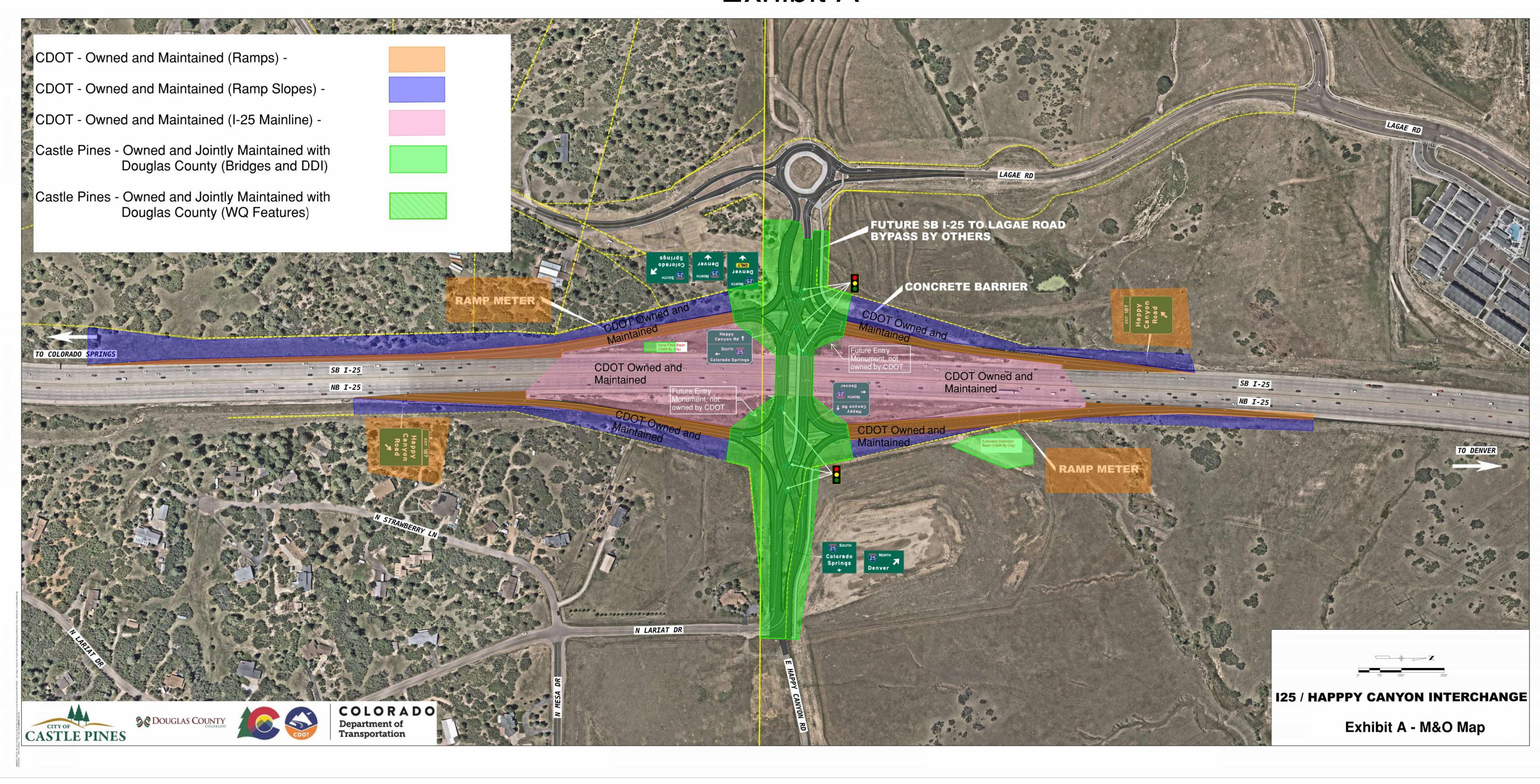
Douglas County commissioners approved a contribution agreement Nov. 3 for up to $15.25 million toward Castle Pines’ estimated $42 million rebuild of the Happy Canyon Road interchange at Interstate 25. The county’s approval advances the project’s funding plan; it does not establish that the agreement has been executed or that the county has paid.
The project will convert the interchange to a diverging-diamond design, add a bridge north of the existing bridge, replace the existing bridge and modify ramps and intersections. The work also includes traffic signals, barriers and drainage, the city-county agreement says. Castle Pines will lead construction and cover project costs above the county’s $15.25 million cap. Staff estimated the city’s contribution at about $15.5 million. The agreement estimates about $11 million from the Colorado Department of Transportation’s Statewide Bridge and Tunnel Enterprise, including $1 million for maintenance and repairs. A September department memo said its contribution depended on an access permit and a bill of sale transferring the existing bridge to Castle Pines.
Under the agreement, the county would pay $8.25 million after the agreement is executed and Castle Pines awards a construction contract. It would pay the remaining $7 million within 60 days after the second construction package’s contract is awarded.
Staff said the first package is expected to begin later in November 2026. It would build the new bridge north of the existing one and shift traffic on I-25. The second package, expected to begin in spring or summer 2027, would include the remaining interchange work. The agreement calls for maintaining emergency access to I-25 and local access to communities on both sides of the highway during construction.
Castle Pines would manage maintenance and repairs, with the city and county sharing eligible long-term costs equally. Those costs are separate from the county’s construction contribution.