
Teller commissioners approve short-term rental rules with 10% subdivision caps
Teller County commissioners approved licensing rules for short-term rentals in unincorporated areas, including zoning limits, a 10% cap, safety standards, a 60-day grace period and penalties for unlicensed operation.
Published at
Teller County commissioners approved Ordinance No. 23 on Sept. 10, creating a licensing system for short-term rentals in unincorporated areas and generally limiting licenses to 10% of eligible residential properties in each subdivision or county quadrant.
The board approved the ordinance after amending the definition of an “existing short-term-rental operator.” The amendment changed the cutoff from operation before the ordinance’s Aug. 6 first reading to operation before the ordinance’s effective date, according to the meeting recording. Commissioners Dan Williams, Campbell and Erik Stone voted yes, and the chair announced that the ordinance had passed.
The ordinance covers rentals of fewer than 30 days in unincorporated Teller County. Short-term rentals would be allowed only in the A-1, R-1, RR and R1M zoning districts. Properties must be residential, have required building permits and a valid certificate of occupancy, and generally must have been owned by the applicant for at least 365 days.
Leased properties, multifamily buildings, guest houses, accessory dwelling units, tents, yurts and recreational vehicles are excluded. Each property may receive one nontransferable license. The initial application fee is $250 and the annual license fee is $750, subject to possible changes through the county’s fee schedule or a board resolution.
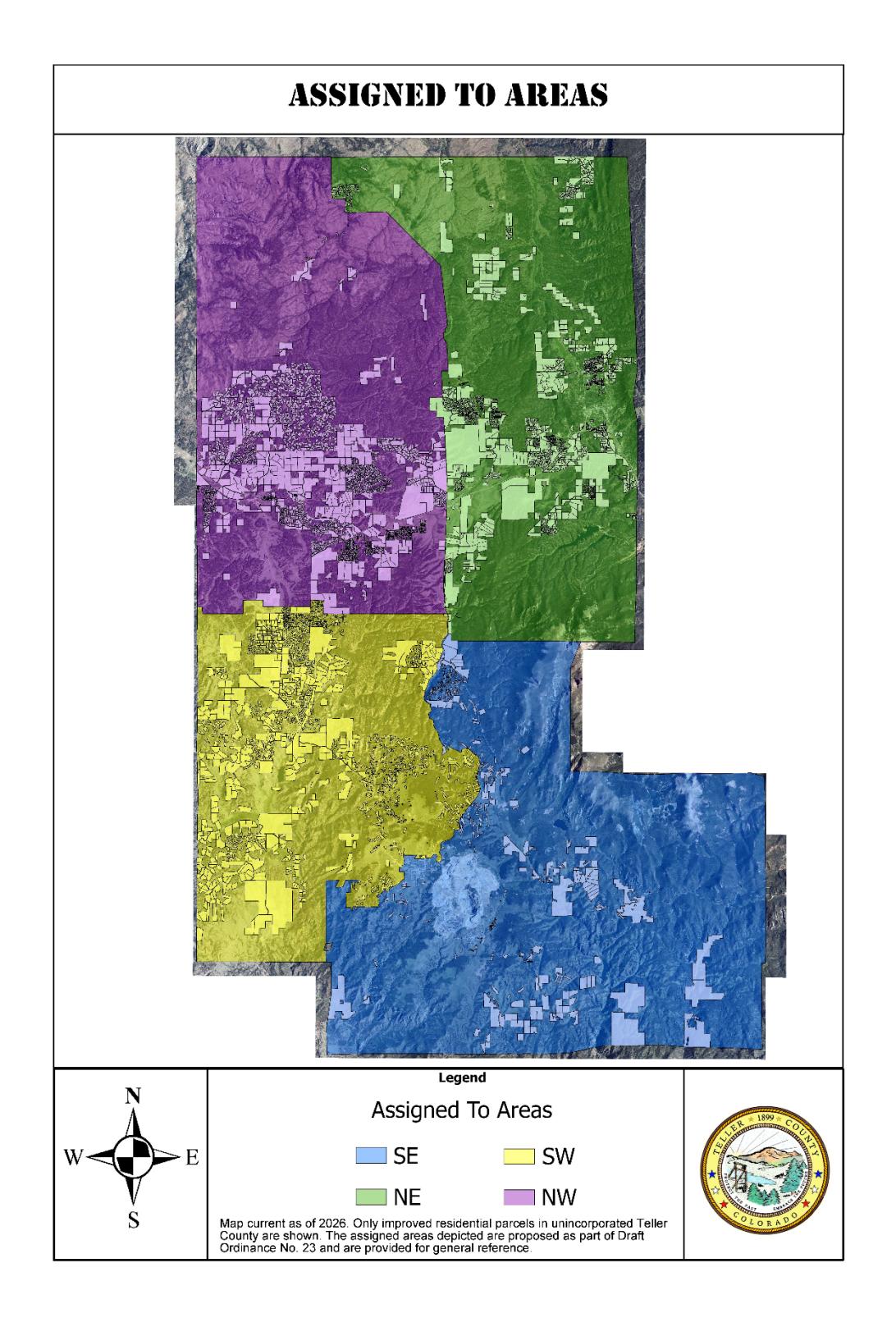
The ordinance text sets the cap at 10% of residential properties with dwellings in each subdivision. Properties outside subdivisions would be counted within one of four county quadrants. Vacant parcels and properties without dwellings would not count toward the total, which would be calculated annually using assessor records from Jan. 1. Owner-occupied short-term rentals are exempt from the cap.
Existing operators could apply for a one-time cap exception by submitting a complete application within 60 days after the ordinance takes effect. The amended cutoff could allow operators who began renting after Aug. 6 but before the effective date to qualify, depending on how the county applies the provision. Operators without a county license after the grace period would violate the ordinance, and later applications would generally be subject to the cap.
Licensees would need a local agent who can respond to complaints within 60 minutes. Requirements include site and floor plans, septic and wastewater documentation, water-rights documentation, at least $1 million in insurance coverage per claim in the aggregate, an evacuation plan, emergency-notification registration, trash-removal arrangements and notice to neighboring property owners.
The rules set occupancy limits based on septic-system capacity or, for properties connected to central sewer, two occupants per bedroom. Rentals would need at least two off-street parking spaces and designated snow storage. Quiet hours would run from 10 p.m. to 6 a.m., and events such as weddings, concerts, conferences, meetings and retreats would be prohibited. The ordinance also bars camping, recreational shooting, on-property all-terrain vehicle use and most outdoor fires and cooking.
Advertisements would have to include a valid county license number and the rental’s maximum occupancy. Platforms would have seven days after county notice to remove listings with invalid or revoked licenses. The county would not conduct routine annual inspections but could inspect before a license’s first renewal or in response to complaints, suspected violations, documented violation histories or suspected unpermitted improvements.
A license could be suspended or revoked after a show-cause process and a hearing before the Board of Adjustment. A revoked licensee would be barred from reapplying for two years. The ordinance provides civil penalties ranging from $100 to $2,650 per day under the statutes it cites and also describes violations as civil infractions carrying fines of up to $1,000 per violation.
The ordinance says it will take effect on the later of Dec. 1, 2026, or 30 days after publication of the adopted ordinance. The publication date and resulting effective date were not available in the records reviewed.